About us
Epoxy floors for a damp, warm coast
Epoxy Flooring Durban coats garages, homes, shops and factory floors around the city. We have no showroom. We come to your floor, and most of what we do there happens before any colour is chosen.
Who you are dealing with
You deal with us from the first message to the last coat. We take the enquiry, arrange the site visit, recommend a system and put the price and dates in writing.
The grinding, priming and coating are done by our appointed installation contractor, working on our behalf. You do not have to manage anyone separately, and any question about the floor comes back to us.
Coastal conditions are the reason we are fussy about the early steps. Muggy summer air and concrete that holds moisture both work against a coating, and neither shows up in a brochure photo.
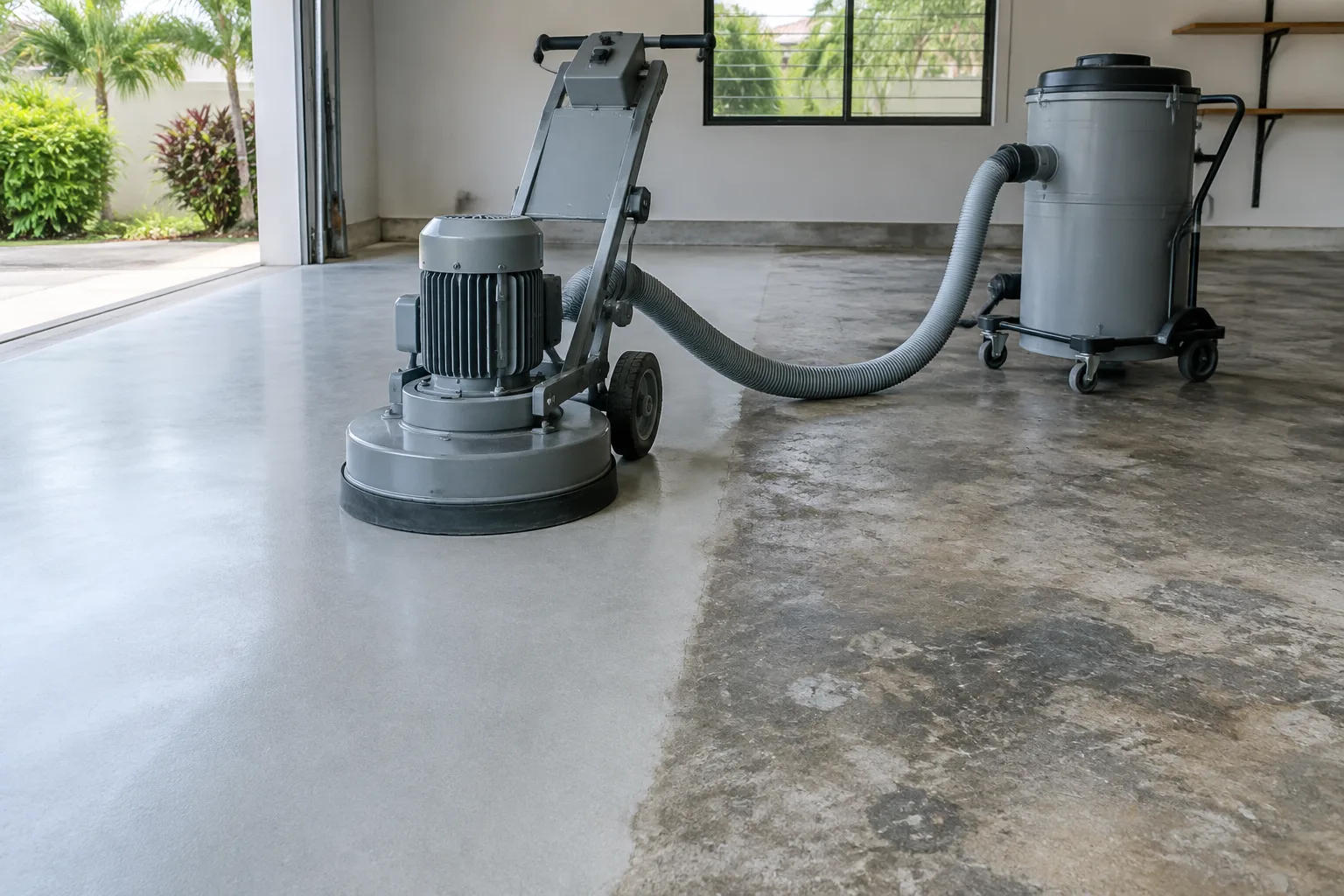
Three readings we take on every Durban slab
The coating is mixed to a manufacturer's data sheet, and that sheet sets hard limits for the air and the concrete. On this coast those limits are easy to cross without noticing.
Air that is already at the limit
The epoxy data sheet we work to sets 80% relative humidity as the ceiling for application. Durban's long-term average for January, February and March is 80%. So on a summer job a hygrometer reading comes before the tins are opened, and if the air is over the line we wait for it to drop or come back another day.
The 3 °C dew-point margin
The slab and the wet coating have to stay at least 3 °C warmer than the dew point, or moisture can condense on the surface and leave a bloom on the finish. In muggy air the dew point sits close to the air temperature, and a shaded garage slab often runs cooler than the room. Both get measured before mixing.
Moisture inside the concrete
A slab can look dry and still hold water. The data sheet caps it at 4% moisture by weight and asks for a check that no damp is rising from below. Where a slab fails either test, a moisture barrier goes down first or the job does not go ahead.
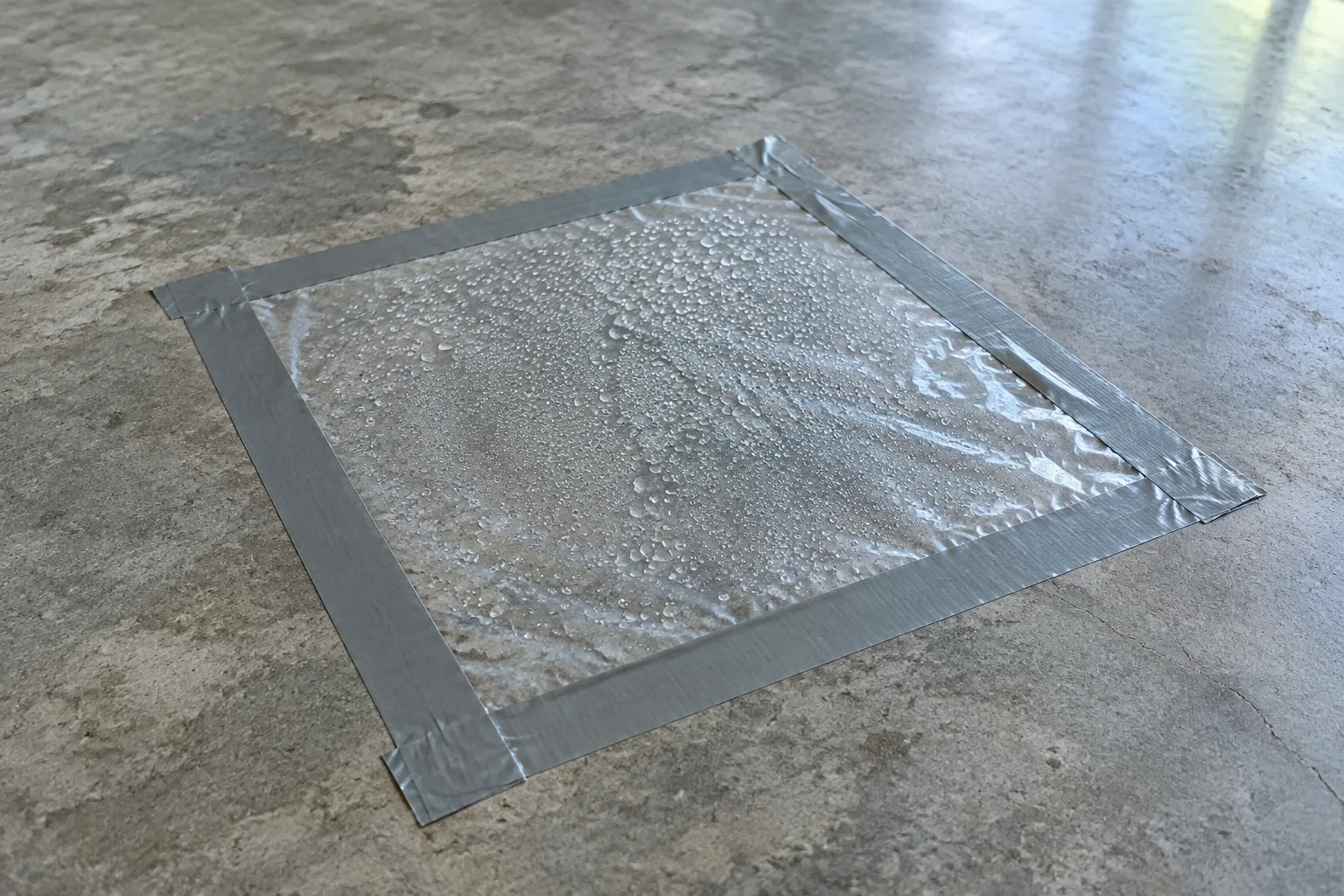
Humid air is the everyday problem here, and we wrote up how it affects curing in our guide to laying epoxy in Durban's humidity. If you want to know what each day on site looks like, from the first grind to the final coat, the job is set out step by step.
Sources: manufacturer's data sheet for the epoxy we quote from (South Africa, September 2026); Durban humidity normals 1961–1990 (NOAA), as tabled in Wikipedia's Durban climate data.
What you can hold us to
We will
- Come and look at the floor, test it and measure it before the price is final.
- Grind or otherwise mechanically open up the concrete so the primer has something to grip.
- Put the chosen system, its cost and the working days in writing before anything is booked.
- Keep the new floor shut off from water and damp for its first day, as the coating's maker requires.
We won't
- Roll a coating onto concrete that has rising damp and hope it holds.
- Mix and pour while the humidity or dew point is outside the product's limits.
- Show you computer-made pictures and call them our finished jobs.
- Pass your details to anyone other than the installer appointed to your job.
Where we work
Greater Durban, from the beachfront suburbs inland to the industrial parks. On the coast that includes apartment and retail floors in Umhlanga, and inland it takes in the factories and workshops around Pinetown. If it is your garage you are thinking about, the garage epoxy page covers the systems that suit one.
Want a sense of the looks before we visit? The finish examples are illustrations of the systems we install, grouped by type.
Tell us about your floor
A few photos, your suburb and a rough size are enough to start. We reply with questions or a time to come and test the slab, and requesting a quote costs you nothing.
Get a Free Quote