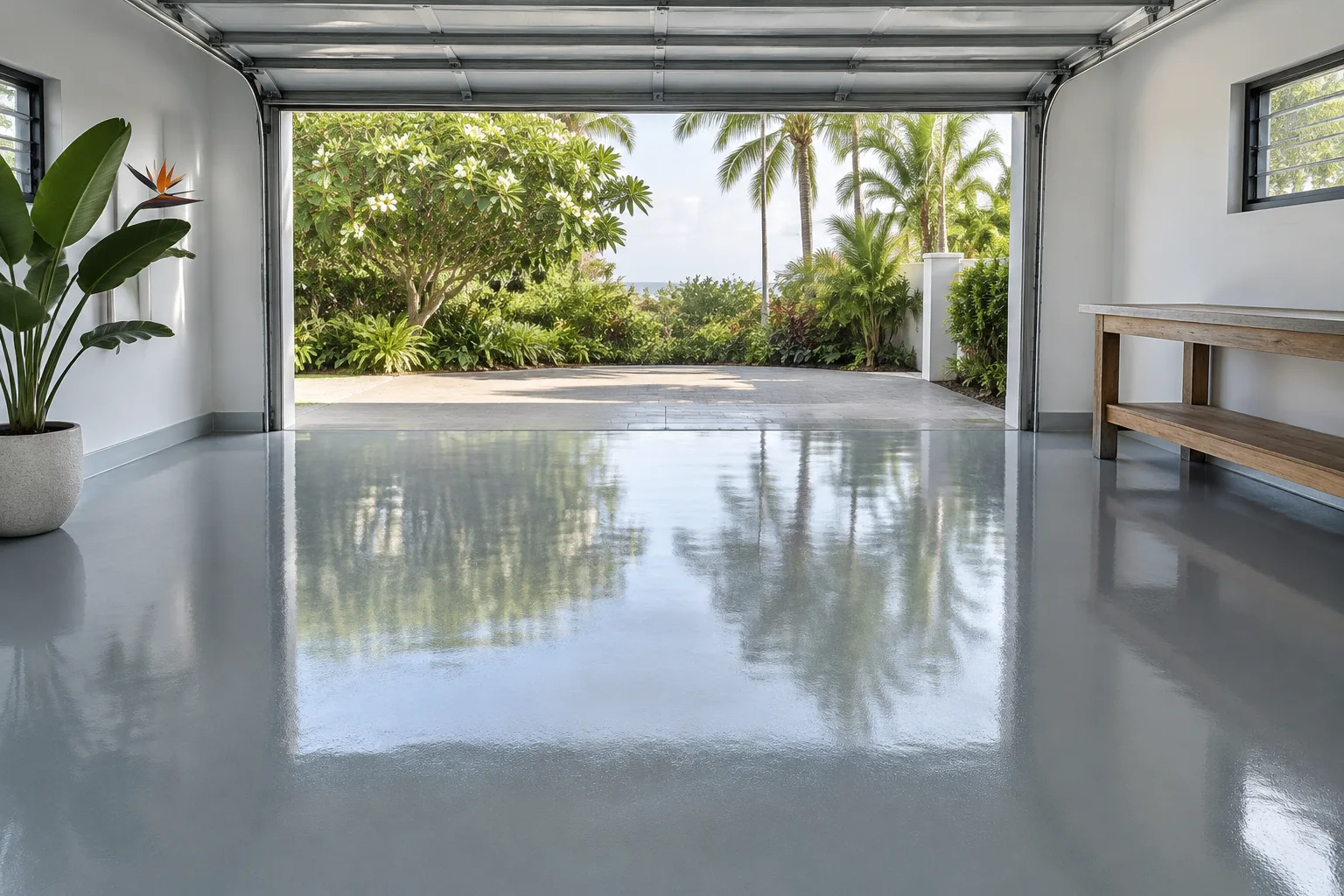
Epoxy floors for Durban, laid with the weather in mind
Durban's air holds a lot of water. On the long-term record it averages 77% relative humidity across the year and 80% from January to March, which is the very ceiling a common floor epoxy's data sheet allows on the day it goes down.
We install garage, home, factory and kitchen floors across the metro and the north coast, and we read the slab and the air before a drop of resin is mixed.
What a humid coastal city does to a floor coating
A good resin can still fail if it goes down on the wrong day or onto the wrong slab. These are the three checks we make on every job in this climate.
Moisture in the concrete
A standard epoxy wants the slab at about 4% moisture or less, with nothing rising from the ground. Ground-floor rooms and garages cut into hillsides are the usual suspects. We meter it and run a plastic-sheet test before quoting the system.
Dew point on install day
Fresh resin needs a slab that stays a good 3 °C warmer than the dew point. Miss that and condensation forms on the curing surface, leaving a cloudy bloom. On close summer mornings we take readings every few hours.
Sun through doors and windows
The city logs roughly 2,365 hours of sunshine a year. Uncovered epoxy may change colour where strong light lands on it; near big glass doors we finish with a UV-resistant polyurethane topcoat.
Floors we lay
Six systems cover most floors in a house, shop or plant, from a weekend-car garage to a dairy floor that gets hosed down every day. Each page below explains what the system is good at, where it falls short, and the published limits we work to when we install it.
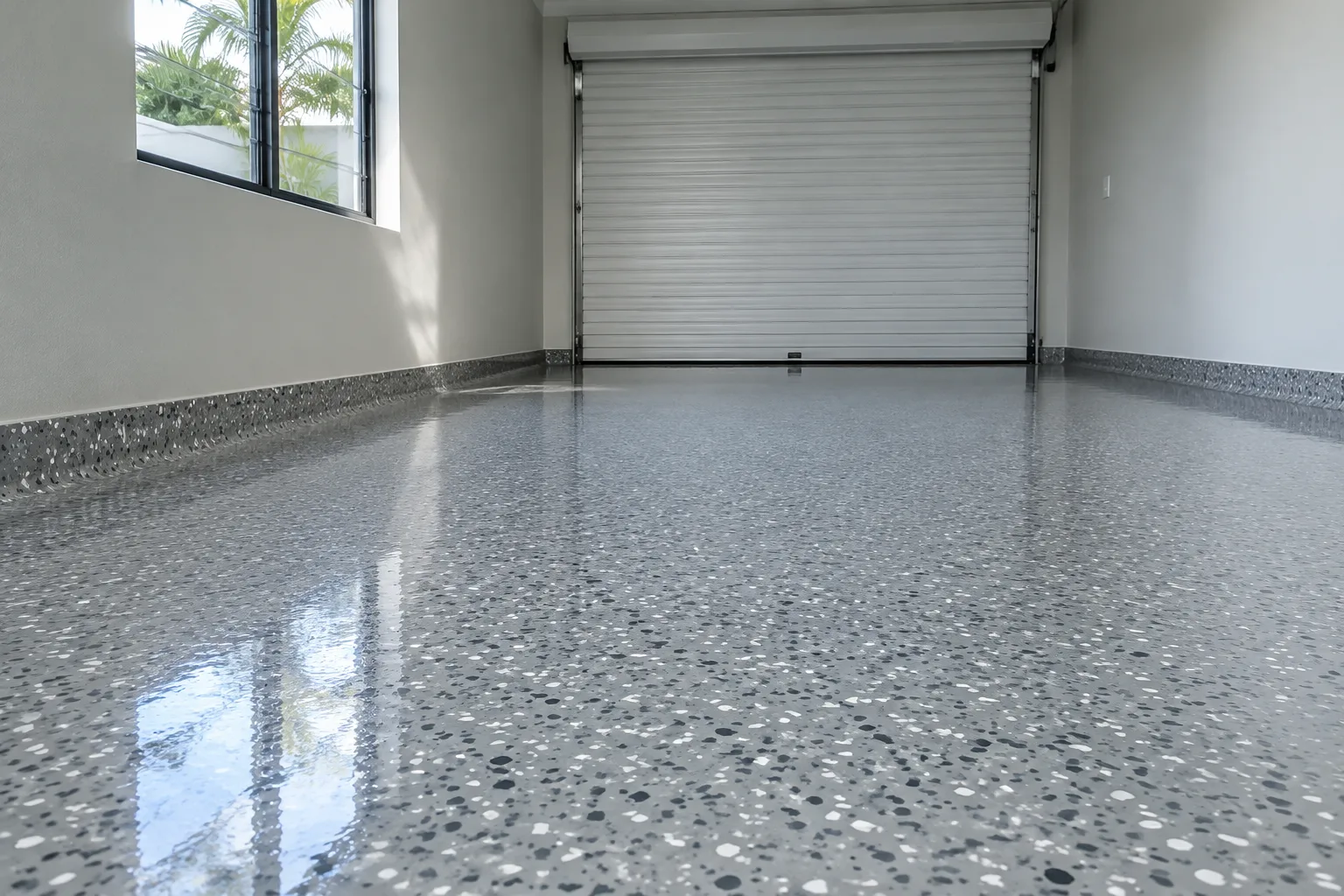
Garage floors
Moisture-tested, ground back and coated so oil drips wipe straight off.
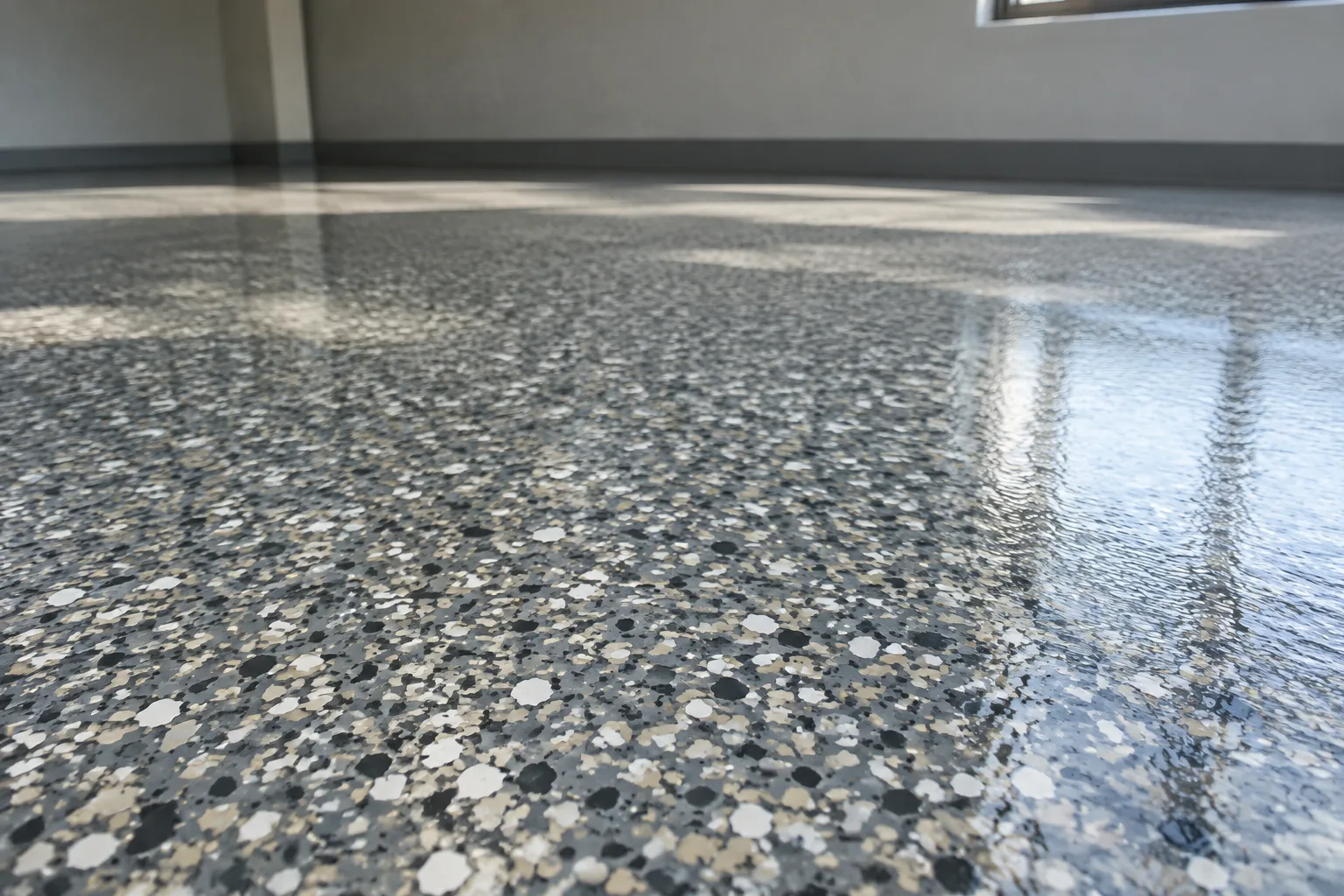
Flake finishes
Speckled chip floors that hide dust, with quartz added where floors get wet.
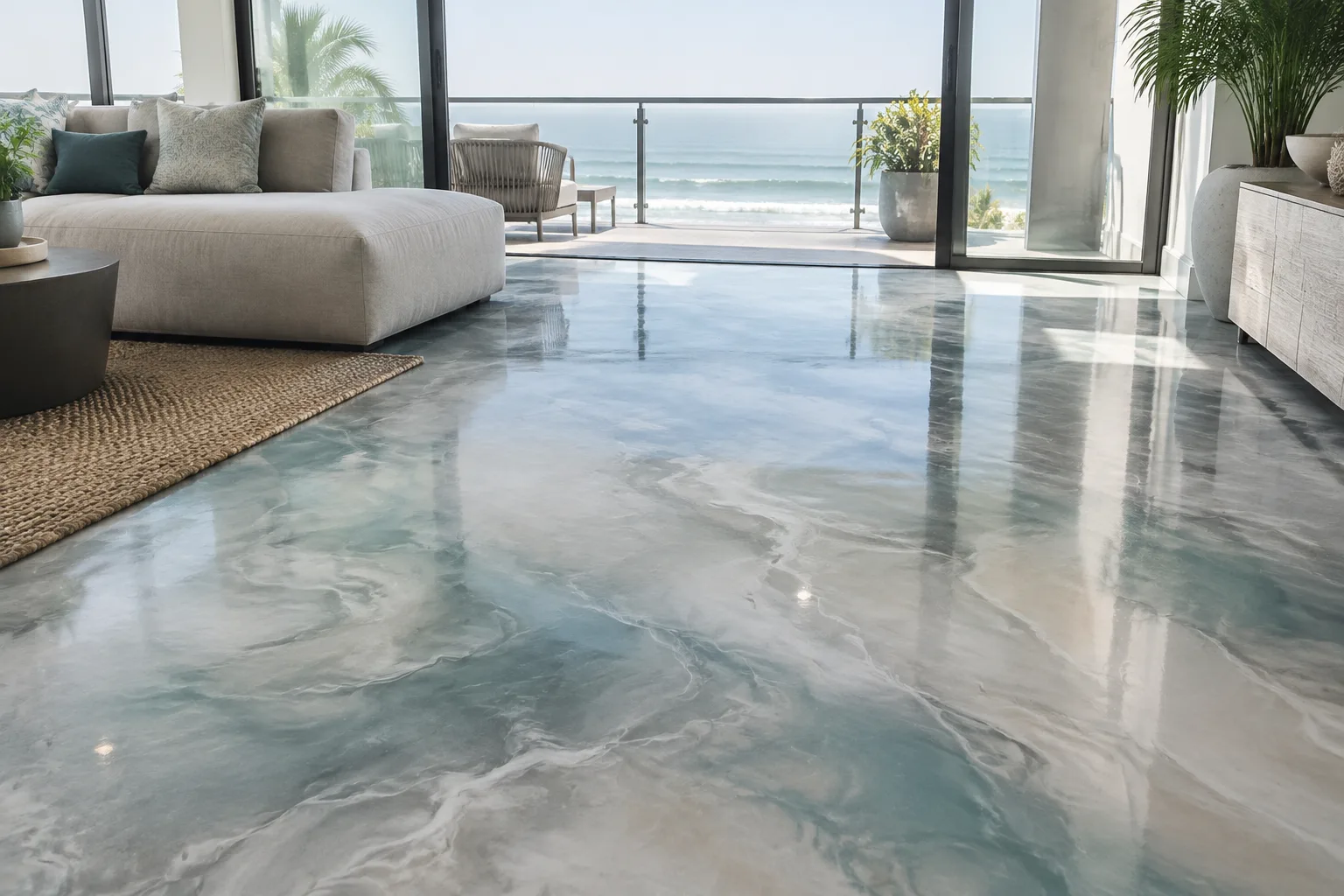
Metallic epoxy
Hand-worked swirls for living spaces, sealed against strong coastal sun.
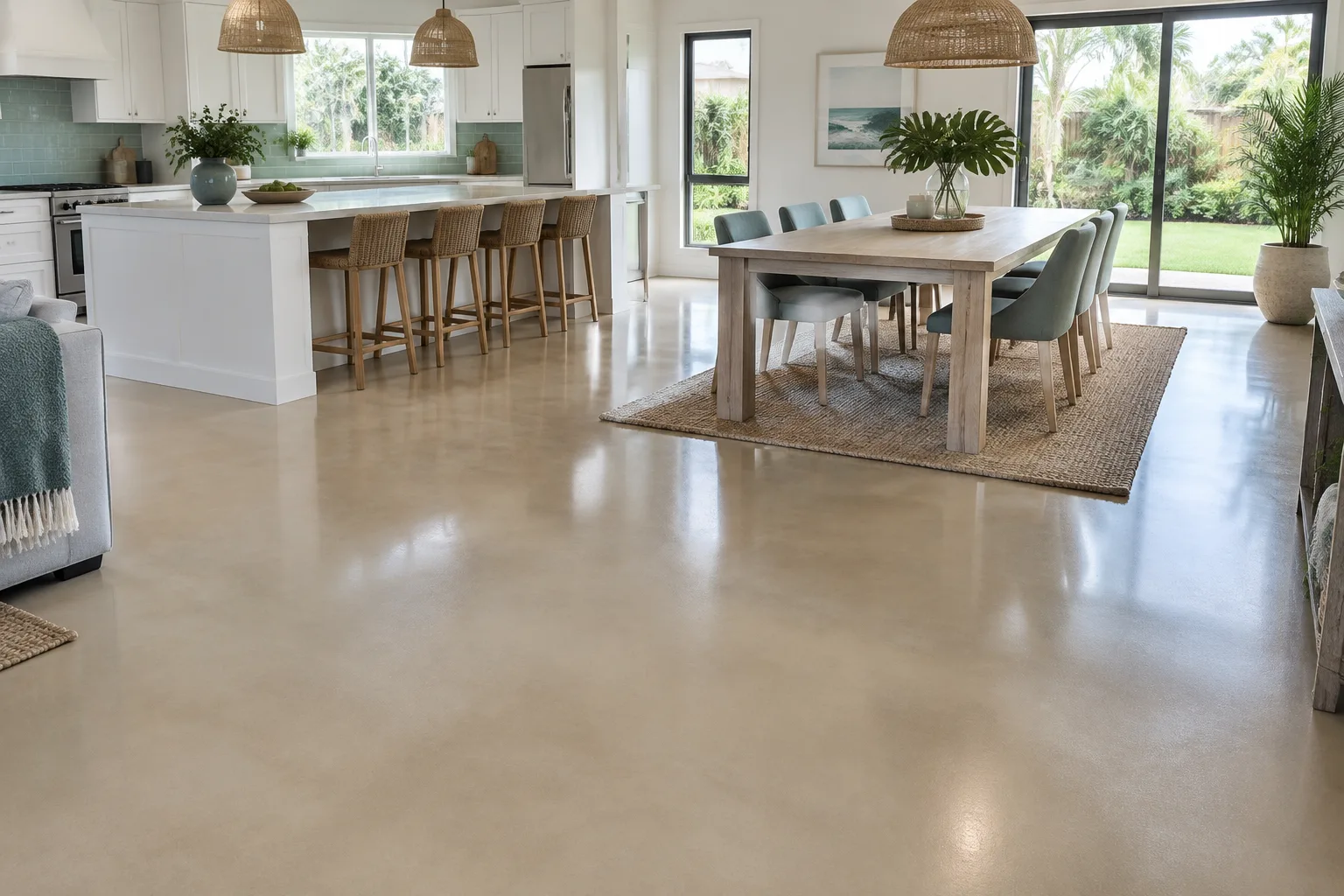
Homes and apartments
Kitchens, lounges and patios, with guidance on what your trustees must approve.
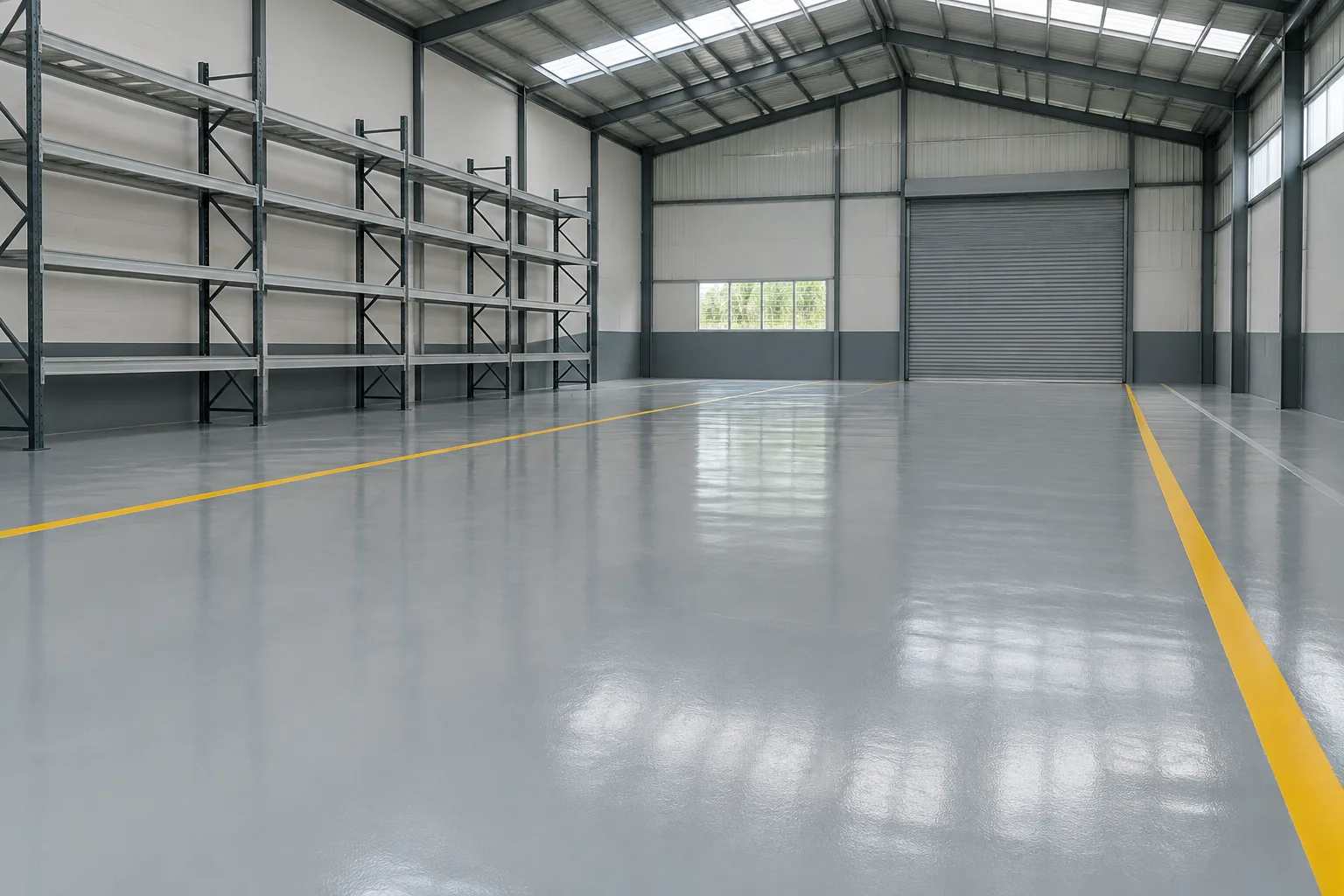
Industrial and commercial
Warehouse, factory and showroom floors laid in phases around your operation.
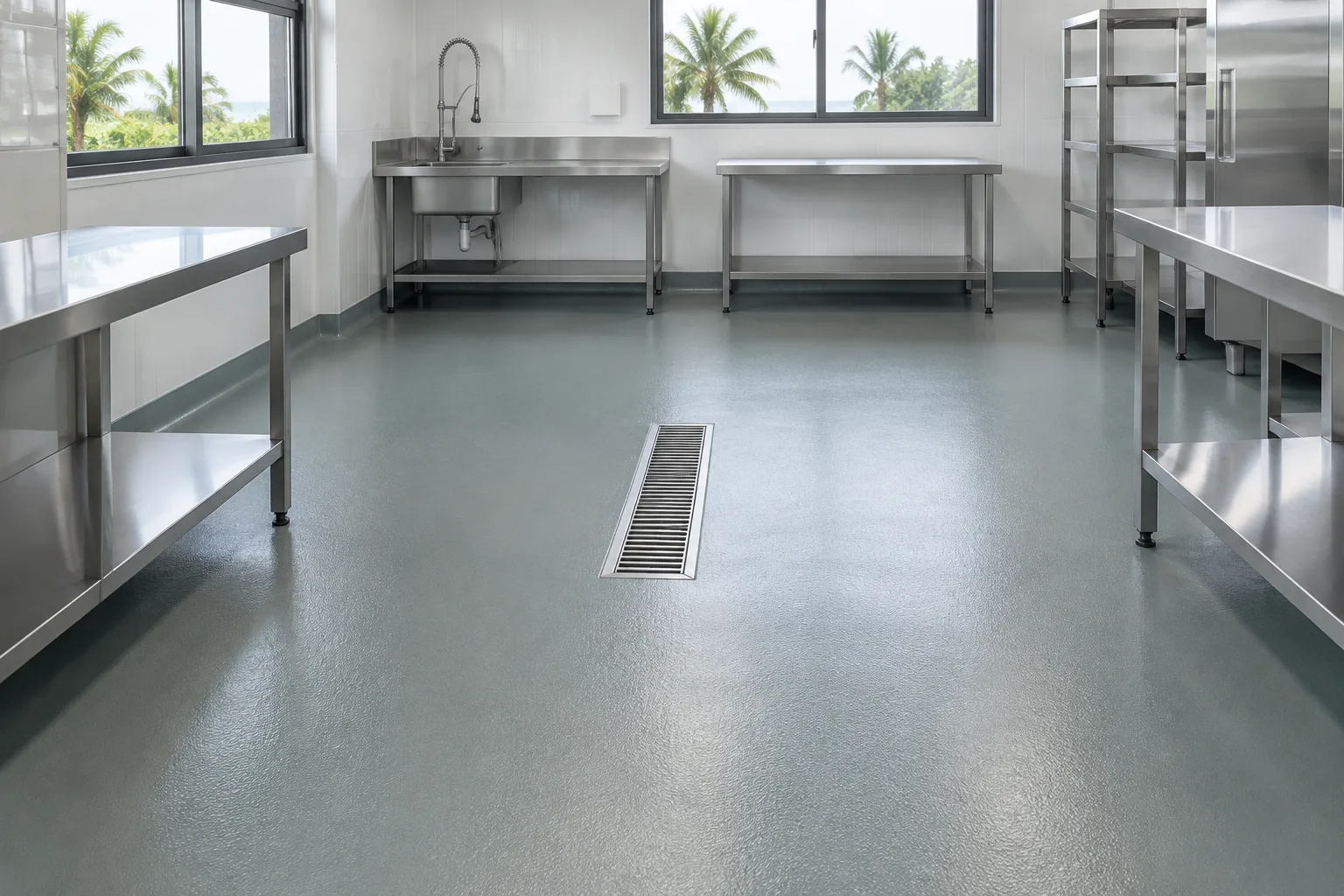
Polyurethane cement
Thick screeds for hot washdown, kitchens, food production and cold rooms.
Where we work
Our base area is the eThekwini metro, from the beachfront out to the inland industrial suburbs. Inland, Pinetown's factories and workshops sit in one of the four main industrial hubs of the Durban-Pinetown region, where floors carry forklifts and pallet jacks rather than family cars.
Closer to the sea, garages and living areas in Durban North get the same moisture and soundness tests whatever the age of the house, while Umhlanga apartments and offices bring sectional title rules and tight access into the planning.
Further up the coast, epoxy flooring in Ballito means a different municipality altogether: KwaDukuza, in the iLembe District, about 40 km north of the city. On an estate, its contractor rules become part of the plan.
From enquiry to a finished floor
- 01
You send the room, the rough size and a photo if you have one. Asking costs nothing.
- 02
We visit, measure, test the slab's moisture and soundness, and recommend a system.
- 03
You get a written quote. Once you accept, we fix a start date around your plans.
- 04
Grinding, repairs and coating, then the cure. You hear from us exactly when feet, cars and furniture may return.
Wondering about cost first? Our Durban epoxy price guide explains what moves the number.
Floor paint, epoxy or polyurethane cement?
Floor paint goes on as a thin decorative film. What we install are two-part resin systems: a base and a hardener that react on the floor, bonded to concrete that has been ground open first. Our article comparing floor paint with a proper epoxy system covers why the paint so often lifts in a garage.
Between the resins, the choice comes down to heat and water. A common floor epoxy is rated for about 50 °C of continuous dry heat. A polyurethane cement screed goes down 6 to 9 mm thick and is made for places with temperature shock, which is why commercial kitchens and food plants use it.
For homes, the deciding factors are usually looks and light. Solid colours suit kitchens and garages, flake hides grit, and metallic is for rooms where you want the floor to be noticed. Sunny rooms with large glass doors need the UV-resistant topcoat whichever look you pick.
Before you book
Tell us about your floor
Garage, lounge, kitchen or factory floor: give us the basics and we will arrange a visit.
Request my free quote