Polyurethane floors for kitchens, food plants and cold rooms
When boiling water hits the floor at the end of every shift, or a freezer door opens onto a warm corridor all day, a thin epoxy coat is on borrowed time. Polyurethane cement is a thick, trowelled screed made for those places. It is what we specify where heat, water and hygiene all land on the same floor.
Get a Free Quote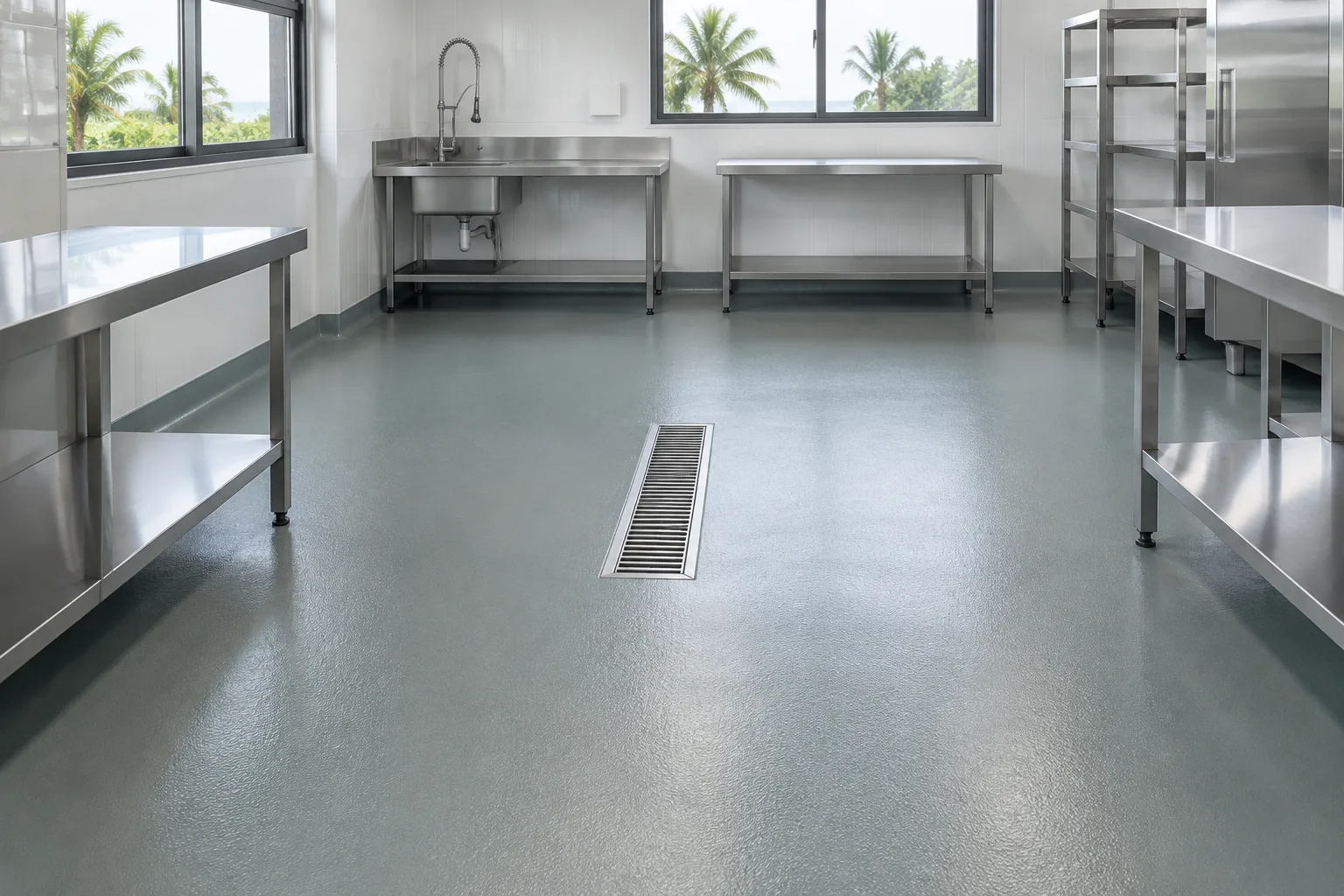
Epoxy coating or polyurethane cement?
Built from two manufacturer data sheets: a widely sold South African floor epoxy and a polyurethane cement screed from the same maker. Other brands differ in detail; the pattern holds.
| Floor epoxy | Polyurethane cement | |
|---|---|---|
| Heat it is built for | About 50 °C dry heat continuously; occasional steam up to about 80 °C in a thick broadcast build | Areas with temperature shock: hot washdown, ovens, chillers and freezers |
| Typical thickness | A fraction of a millimetre to a few millimetres | 6 to 9 mm as a wearing coat |
| Look | Gloss or satin, wide colour choice | Matt, a handful of solid colours |
| Damp concrete | Needs about 4% moisture or less, or a separate barrier | Can go on damp concrete above 4%, as long as no water is pooling or rising |
| Food areas | Depends on product | Non-tainting; wait at least 48 hours before food comes in |
Where we put it
Commercial kitchens
Hot fat, boiling water from the pot-wash and constant mopping. The screed curves up onto the wall, leaving no skirting joint to trap grime, and it falls to the drains.
Cold rooms and freezer thresholds
The material moves with temperature much like concrete does, which helps it stay bonded where cold-room floors meet warm loading areas.
Wet production and bottling
Breweries, dairies, butcheries and beverage lines that are hosed all day. Damp slabs that would stop an epoxy job can usually take this screed, provided no water is pooling or rising.
Laying it in Durban's climate
Polyurethane cement tolerates damp concrete better than epoxy, but not damp air. Its data sheet still sets 80% relative humidity as the upper limit and asks for the slab to stay 3 °C clear of the dew point. With Durban averaging 80% humidity through the first three months of the year, a summer kitchen job is planned around the extraction fans and air conditioning as much as the calendar.
The finish is matt, and like most resin floors it can shift colour slightly under strong direct sun. Indoors that rarely matters; we mention it for loading bays with open roller doors.
Choosing between our floor systems
If the floor stays dry and the heat stays off it, a standard industrial epoxy system costs less and offers more colours. One site can use both: polyurethane cement in the production room, epoxy in the stores and passages.
We visit factories in Pinetown and its industrial parks and restaurant and hotel kitchens up the coast to Ballito.
Polyurethane cement is a premium system and is always quoted after a site visit; the pricing guide explains what drives the cost.
Polyurethane floor questions
Plan the shutdown with us
Tell us the area, what spills on it and how many days you can close. Quotes are free to request.
Request a polyurethane quote